

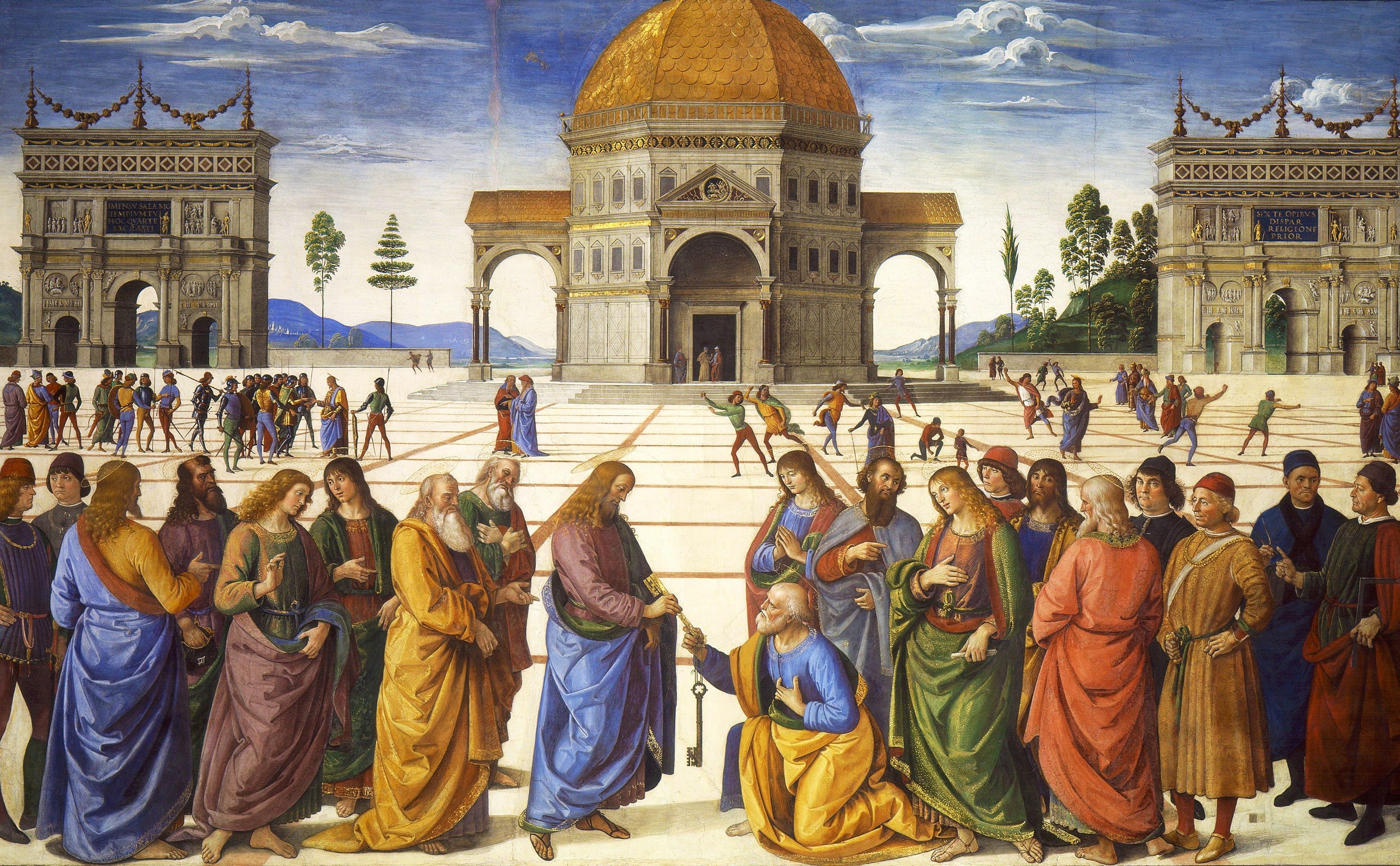
“Stand firm and hold fast to the traditions that you were taught by us, either by word of mouth or by our letter.” 2 Thessalonians 2:15
That verse creates a small problem for the idea that the Christian faith was meant to be preserved only in a book.
What traditions is Paul talking about, and were they ever written down? Answering it requires remembering something modern Christians often forget, that the Church existed before the New Testament did. When Paul wrote to the Thessalonians there was no compiled New Testament sitting on anyone’s shelf. Some apostolic letters were circulating. Some Gospels had not yet been written. The canon itself would not be formally recognized for centuries. But the faith already existed.
Paul had been to Thessalonica. He had preached the Gospel, instructed converts, celebrated the Eucharist, corrected errors, and organized the life of the Church. Christianity arrived there as something taught and lived long before it was something bound between two covers. So when Paul tells them to “hold fast to the traditions,” he is referring to what he had already handed on. And he names two ways that teaching came to them: by word of mouth and by letter.
And this isn’t an isolated line. In 1 Corinthians 11:2, Paul praises Christians for maintaining the traditions “just as I delivered them.” Delivered, not compiled, not published. Handed on. Again in 2 Timothy 2:2: “what you have heard from me… entrust to faithful men who will be able to teach others also.” That’s not a closed loop ending in a book. That’s a living chain that was heard, entrusted, taught, and passed on.
Spoken and written are two different modes of transmission, and the distinction really matters, especially concerning our faith. This isn’t Scripture plus something else. It’s the same apostolic faith, handed on in more than one way. Some of what the Apostles taught was later written down as Scripture, but not everything they taught was reduced to writing. The New Testament itself tells us this. John admits it outright, “Jesus did many other signs… which are not written in this book” (John 20:30). And at the very end of his Gospel, he doubles down by stating that there’s more that wasn’t recorded than was.
Paul occasionally references instructions he gave in person. In 1 Corinthians 11:34 he says, “the rest I will set in order when I come.” That’s not the language of someone who thinks the entire Christian faith is about to be contained in a book. In fact, in 1 Thessalonians 2:13, Paul goes even further by calling what the Thessalonians heard from him the “word of God.” Not what they might later read. What they received by preaching.
Before someone objects, Catholics aren’t claiming the Apostles handed down secret doctrines floating around outside the Bible. The point is much simpler and much more historical. The Apostles taught the faith in person, and the Church continued living that teaching.
So what were the “unwritten” things? Not secret, hidden teachings floating outside the Bible. They were the apostolic faith as it was actually lived and handed on in the Church. You don’t find them by hunting for a missing list. You find them by looking at what the Church consistently believed, practiced, and taught from the beginning. The same communities that received the Apostles’ preaching are the ones who preserved it. Which means the question isn’t “where is the unwritten list?” It’s “what has the Church always received?”
Scripture later reflects this life rather than inventing it from scratch. You can actually see this happening inside the New Testament itself.
Take Sunday worship. The earliest Christians gathered on the first day of the week because that was the day Christ rose from the dead. Acts 20:7 shows believers gathering on the first day of the week to break bread, and in 1 Corinthians 16:2 Paul tells Christians to prepare their collections on that day. Yet Scripture never contains a formal decree abolishing the Sabbath and replacing it with Sunday. The practice simply appears in the life of the Church as something already accepted.
Or consider Church leadership. The New Testament refers to bishops, presbyters, and deacons (see 1 Timothy 3 and Titus 1), but it does not present a constitutional manual explaining the full structure of Church governance. That structure was transmitted through apostolic practice. By about AD 107, Ignatius of Antioch is already describing Christians gathering around their bishop with priests and deacons. The pattern clearly existed before the New Testament canon was finalized.
Then there is baptism. The New Testament records entire households being baptized in Acts 16:15, Acts 16:33, and 1 Corinthians 1:16. Scripture shows the practice happening but does not stop to outline every pastoral detail. The Church simply continued what it had received. By the second century, Christian writers were already describing the baptism of children as part of the normal life of the Church. That’s continuity, not change
And zoom out for a second. Acts 2:42 gives you a snapshot of the earliest Christians, “they devoted themselves to the apostles’ teaching and the fellowship, to the breaking of bread and the prayers.” That’s doctrine, sacrament, and lived community. No table of contents. No bound canon. Just a living, breathing Church.
Early Christians themselves understood this dynamic. Around AD 180, Irenaeus of Lyons wrote that the Apostles had “handed down” the faith to the bishops who succeeded them, and that this succession preserved the authentic teaching of the Church. His point was simple. If you wanted to know what the Apostles taught, you could look to the churches they founded and the bishops who continued their teaching.
In all of these examples the pattern is the same. The Apostles taught something, the Church practiced it, and Scripture reflects that life. But there is an even deeper point here that often goes unnoticed. If someone says the only binding authority for Christians is the New Testament alone, they immediately run into a historical problem. The New Testament itself had to be identified and preserved by the early Church. The same Christian communities that received the Apostles’ teaching by word of mouth were the ones who copied the apostolic writings, circulated them, read them in the liturgy, and eventually recognized which books truly belonged to the canon of Scripture. This is what the Church would later call the “deposit of faith.”
In other words, the Bible we hold today comes to us through the very apostolic Church that Paul told believers to listen to.
Ok D.M., of course there were oral teachings, but they were only temporary. Once the Church recognized the Canon of Scripture, they weren’t needed anymore. Sola Scriptura, baby!
Not so fast, my imaginary mini-pope. That’s not how it really works. The “deposit of faith” is simply the name for this reality. The Apostles didn’t hand down fragments. They handed down a complete faith, once for all, entrusted to the Church to guard, preserve, and faithfully transmit (see Jude 3). That deposit includes Scripture, but it is not limited to Scripture. It is the whole body of teaching, worship, and life received from the Apostles and carried forward in the Church. And it doesn’t evolve into something new or get replaced by a book. It is protected, clarified, and handed on intact. Which means the question isn’t whether the Apostles taught things outside of what was written, they clearly did. The real question is whether that apostolic teaching was meant to disappear, or to be preserved. The New Testament answers that for us.
This brings us back to Paul’s instruction. The Apostles did not simply hand down a document. They handed down a faith. Scripture is part of that inheritance, of course. Catholics believe the Bible is inspired by God and uniquely authoritative. But the Bible itself shows us that the Christian faith was transmitted through preaching, worship, instruction, and the life of the Church before it was fully written down.
The Church gave us the Bible before we had a Bible.
Which is exactly what Paul tells the Thessalonians. Stand firm and hold fast, not just to what was written, but to what was handed on. The whole thing. Because the Christian faith did not grow out of the New Testament, the New Testament grew out of the Christian faith.
Folks, this is where the difference actually matters. If the faith is something each generation reconstructs from a text, then its boundaries will inevitably shift with culture, language, and interpretation. We’ve seen that play out again and again. But if the faith is something received and handed on, a deposit to be guarded rather than reinvented, then the Church is not free to reshape it. She is bound to it. That doesn’t make her rigid, it makes her accountable. The same goes for us.
God Bless.
Scripture to read and consider:
1 Corinthians 11:2: 2 I commend you because you remember me in everything and maintain the traditions just as I handed them on to you.
2 Timothy 2:2: 2 and what you have heard from me through many witnesses entrust to faithful people who will be able to teach others as well.
John 20:30–31: 30 Now Jesus did many other signs in the presence of his disciples, which are not written in this book. 31 But these are written so that you may come to believe that Jesus is the Messiah, the Son of God, and that through believing you may have life in his name.
Acts 2:42: 42 They devoted themselves to the apostles’ teaching and fellowship, to the breaking of bread and the prayers.
1 Thessalonians 2:13: 13 We also constantly give thanks to God for this, that when you received the word of God that you heard from us, you accepted it not as a human word but as what it really is, God’s word, which is also at work in you believers.
Issue Quote(s):
Irenaeus of Lyons (c. AD 180) Against Heresies, Book III, Chapter 3, §1
“The tradition of the apostles, manifested throughout the whole world, is present in every Church to be perceived by all who wish to see the truth.”
Basil of Caesarea (c. AD 375) On the Holy Spirit, Chapter 27, §66
“Of the dogmas and messages preserved in the Church, some we possess from written teaching and others we receive from the tradition of the apostles, handed on in mystery; both of these have the same force for piety.”
John Chrysostom (c. AD 400) Homily on 2 Thessalonians
“Therefore, brethren, stand fast and hold the traditions which you have been taught, whether by word or our epistle. Hence it is clear that they did not deliver all things by epistle, but many things also unwritten.”
Upcoming Topic: Stop blaming God for your decisions.
Disclaimer from the Editor: I have done just about everything wrong that a Catholic can do. I was born a Catholic, and by the Grace of God, managed to remain one. I hope these writings educate and edify you. I will make mistakes, and I am likely to offend a few folks along the way. That is not my intention. If you wish to discuss anything written or expressed in this newsletter, please reach out to the email address below. Questions, comments and rude remarks are welcome, one and all. And remember, if you are a practicing Catholic, practice harder!
® 2025 www.howtobecatholic.com Email: dm@howtobecatholic.com
The early Christians accepted without resistance that which was handed down orally before anything was committed to writing as being absolutely binding upon the faithful. It did not become less so the more the teaching was presented in the written word. This was absolutely essential to prevent the spread and acceptance of error. And when error did arise, the matter was resolved by a council of the Church, even its nascent form. For such a resolution to be possible, it was an absolute necessity that there be an authoritative body of teaching that was universally accepted. Without this, the Church would not have endured for more than a few decades at most.
A refreshingly east read . Thank you.